Travel Photography for Beginners: Complete Starter Guide
Introduction
Travel photography is a rewarding way to document your adventures and preserve memories from around the world. Whether you’re exploring bustling city streets, hiking through mountain landscapes, or relaxing on a tropical beach, photography allows you to capture the beauty and emotions of your journey.
The good news is that you can start your travel photography journey without expensive equipment or years of experience. With a basic understanding of photography principles and a little practice, anyone can create stunning travel photographs.
In this guide, I’ll walk you through everything you need to know to begin your travel photography journey with confidence.
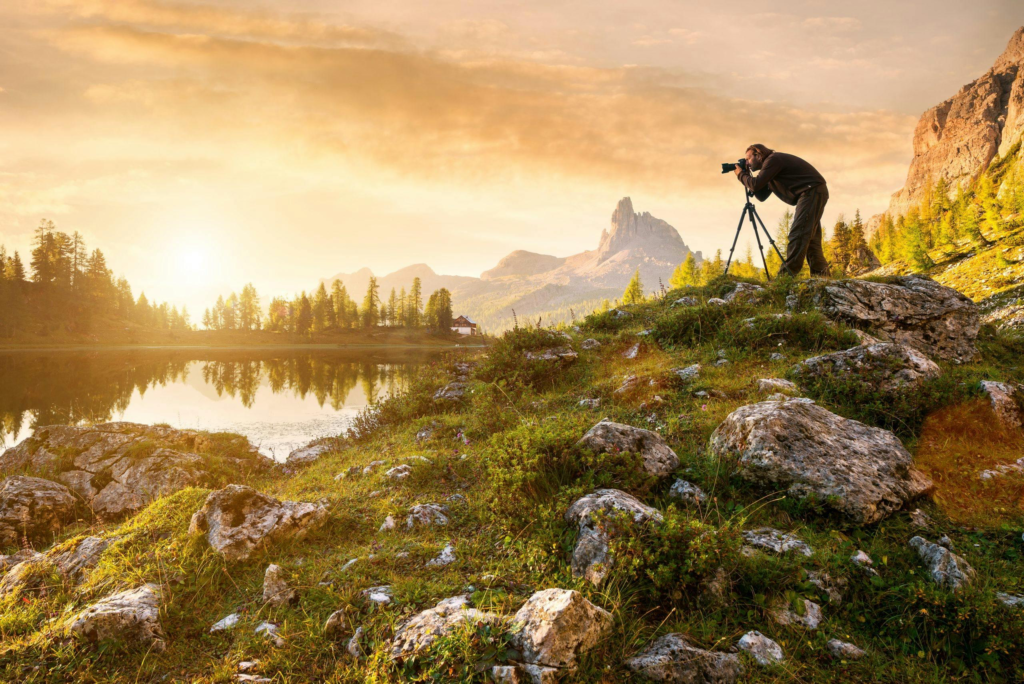
What is Travel Photography?
Travel photography is the art of capturing people, cultures, landscapes, architecture, food, and experiences while traveling. Unlike studio photography, travel photography is often spontaneous and requires photographers to adapt to different environments, lighting conditions, and situations.
The goal is to create beautiful images and tell the story of a destination and the experiences that make it unique.
Travel photography combines several photography styles, including:
- Landscape Photography
- Street Photography
- Portrait Photography
- Wildlife Photography
- Architectural Photography
- Food Photography
Every destination presents endless opportunities to create meaningful and memorable images.
Essential Equipment
One of the biggest misconceptions among beginners is that they need expensive gear to take great travel photos. While professional equipment can help, the photographer’s vision is always more important than the camera itself.
Smartphone Photography
Modern smartphones have become incredibly powerful photography tools. Many travel bloggers and content creators use smartphones to capture high-quality images for websites and social media.
Advantages of Smartphone Photography
- Lightweight and portable
- Always available
- Easy to share photos instantly
- Advanced AI-powered camera features
- Excellent for beginners
Smartphone Photography Tips
- Clean your camera lens before shooting
- Use natural light whenever possible
- Avoid excessive zooming
- Tap the screen to focus on your subject
- Use HDR mode for landscapes
For beginners, a smartphone is often the best place to start.
Mirrorless Cameras
Mirrorless cameras have become the preferred choice for many travel photographers due to their compact size and exceptional image quality.
Benefits of Mirrorless Cameras
- Lightweight design
- Fast autofocus systems
- Excellent image quality
- Silent shooting options
- Great video capabilities
Popular beginner-friendly mirrorless cameras include models from Sony, Canon, Fujifilm, and Nikon.
DSLR Cameras
DSLR cameras remain a reliable option for travel photography, and photographers who prefer traditional camera handling often favor them.
Advantages of DSLR Cameras
- Long battery life
- Wide range of lenses
- Durable construction
- Optical viewfinder experience
Although slightly larger than mirrorless cameras, DSLRs still produce outstanding results for travel photography.
Basic Camera Settings
Understanding camera settings is one of the most important steps toward improving your photography.
ISO
ISO controls your camera sensor’s sensitivity to light.
Low ISO (100–400)
Best for:
- Sunny days
- Landscapes
- Outdoor photography
Benefits:
- Sharp images
- Minimal digital noise
High ISO (800+)
Best for:
- Night photography
- Indoor environments
- Low-light conditions
Drawback:
- Increased image noise
As a beginner, try to keep your ISO as low as possible while maintaining proper exposure.
Aperture
Aperture controls how much light enters the camera through the lens.
It is measured using f-stops.
Wide Aperture (f/1.8 – f/4)
Produces:
- Blurred background
- Strong subject separation
Perfect for:
- Portraits
- Food photography
Narrow Aperture (f/8 – f/16)
Produces:
- Greater depth of field
- Sharper foreground and background
Perfect for:
- Landscapes
- Cityscapes
Shutter Speed
Shutter speed determines how long the camera sensor is exposed to light.
Fast Shutter Speed
Examples:
- 1/500 sec
- 1/1000 sec
Best for:
- Wildlife
- Action shots
- Moving vehicles
Slow Shutter Speed
Examples:
- 1 second
- 5 seconds
Best for:
- Waterfalls
- Light trails
- Night photography
Using a tripod becomes important when shooting at slower shutter speeds.
Composition Rules
A great photograph is not just about camera settings. Composition plays a major role in creating visually appealing images.
Rule of Thirds
The Rule of Thirds is one of the simplest composition techniques.
Imagine your frame divided into nine equal sections using two horizontal and two vertical lines.
Place important subjects along these lines or at their intersections rather than directly in the center.
This creates a more balanced and engaging image.
Leading Lines
Leading lines guide the viewer’s eyes through the photograph toward the main subject.
Examples include:
- Roads
- Bridges
- Rivers
- Railway tracks
- Pathways
Using leading lines helps create depth and makes images feel more dynamic.
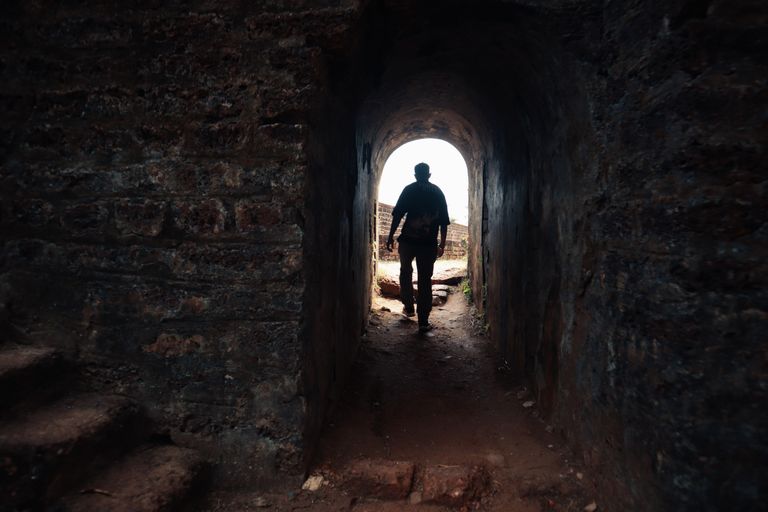
Framing
Framing involves using natural elements within a scene to surround your subject.
Examples include:
- Windows
- Doorways
- Trees
- Arches
- Tunnels
Framing helps draw attention to the subject while adding visual interest.
Best Time for Photography
Lighting is one of the most important factors in photography.
The same location can look entirely different depending on the time of day.
Golden Hour
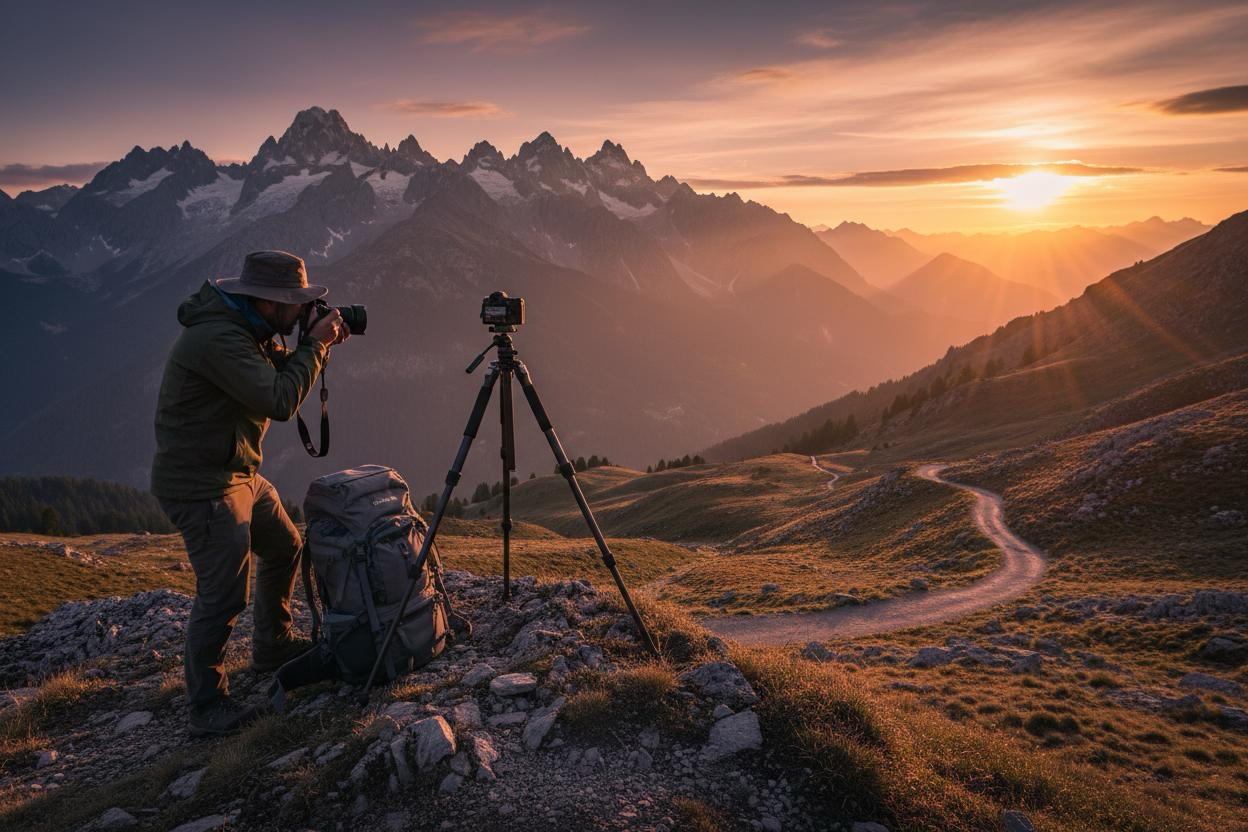
Golden Hour occurs shortly after sunrise and before sunset.
Why photographers love it:
- Soft light
- Warm colors
- Beautiful shadows
- Flattering portraits
Many photographers take the world’s most iconic travel photos during Golden Hour.
Blue Hour
Blue Hour occurs just before sunrise and shortly after sunset.
Characteristics:
- Deep blue skies
- Balanced city lights
- Dramatic atmosphere
Blue Hour is ideal for:
- Cityscapes
- Architecture
- Waterfront photography
The short duration of Blue Hour makes preparation essential.
Common Beginner Mistakes
Most photographers make mistakes when starting out. Learning from them can significantly improve your results.
Shooting Everything at Eye Level
Try different perspectives by crouching low or finding a higher viewpoint.
Ignoring Lighting
Poor lighting can ruin even the most beautiful scene.
Always pay attention to the direction and quality of light.
Overediting Photos
Heavy filters often make photos look unnatural.
Focus on subtle edits that enhance the image.
Forgetting the Story
A technically perfect photo isn’t always memorable.
Think about the story and emotion behind every image.
Taking Too Few Photos
Don’t be afraid to take multiple shots from different angles.
Photography improves through experimentation and practice.
Conclusion
Travel photography is more than simply taking pictures during a trip. It is about capturing experiences, preserving memories, and sharing stories that inspire others to explore the world. Whether you’re using a smartphone, a mirrorless camera, or a DSLR, understanding basic camera settings, composition techniques, and lighting principles will help you create stronger images from the very beginning.
Remember that every professional photographer started as a beginner. The more you practice, experiment, and learn from your experiences, the better your photography will become. So grab your camera, head out on your next adventure, and start telling your travel stories one photograph at a time.